Best in Field: The Comeback of a Cavity Nester
The Hatch a Hundred campaign continues this month as more and more hatched chicks boost the population numbers of the American Kestrel in and around the Hopewell Valley. Nearly 25 nest boxes have successful occupants and with that, 62 fluffy falcons have been banded so far.
The American Kestrel, have taken a liking to the nesting boxes in St. Michael’s Farm Preserve. And for good reason, these nest boxes are strategically placed there just for them. They have been constructed, installed, and monitored by local volunteers. (Several more dot the countryside in the surrounding township both on private and public lands.) Not only do American Kestrels require a large undisturbed area of farm field or open space in which to hunt, they are secondary cavity nesters. (Secondary meaning that they don’t hollow out their own tree, they use existing cavities, or abandoned woodpecker holes). Habitat loss was one of their main hurdles in successfully raising their young in recent years. Competition from European starlings and other cavity nesting birds also contributed to their on-going difficulty. Thanks to the addition of man-made cavities like the nest boxes for the Hatch a Hundred campaign, American Kestrels have been met with greater success rates over the breeding season from spring to early summer. Males and females begin scouting for locations as early as March!

Until they are old enough to fledge, they will continue to feed on mice, crickets, and other small feasts including songbirds. The remains inside the nest box can sometimes tell us what was brought in by the parents. Falcons have ferocious appetites, and by the looks of it, they have been eating well.
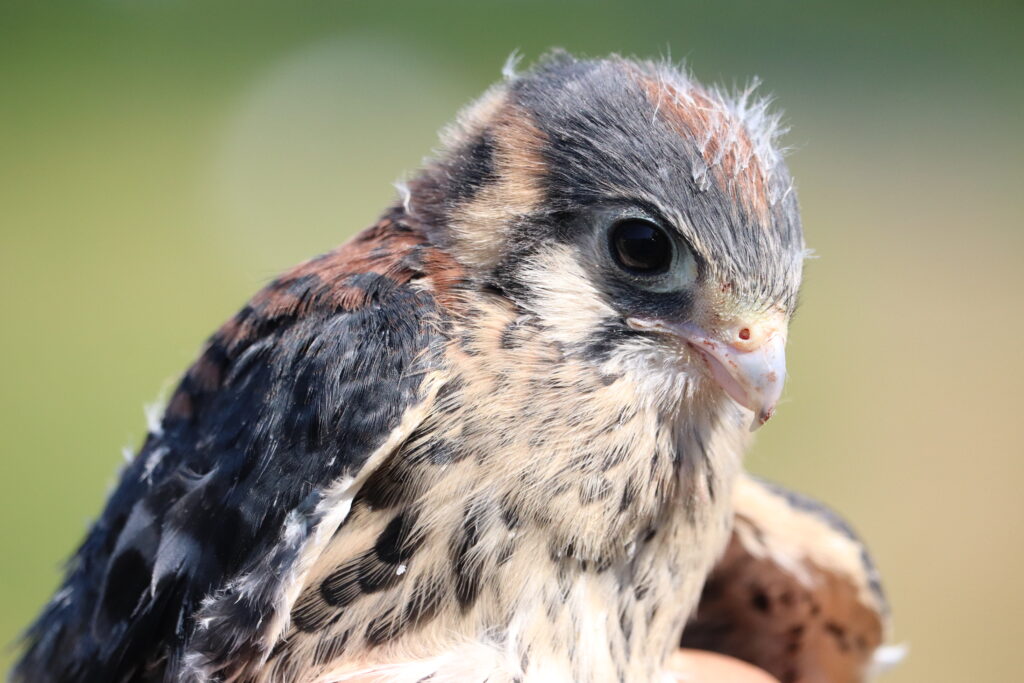
The fluffy little young falcons with intelligent eyes, and messy little beaks were weighed and documented. Bill Pitts (left) from the NJ Fish & Wildlife Service, Endangered and Nongame Species program, led the documentation and tenderly placed the youngsters back in their nest box once the bird banding operation was complete. St. Michael’s has had several success stories when it comes to American Kestrels in this particular preserved area of land. But the Hatch a Hundred campaign has brought expansion into Somerset, Warren and Mercer counties.
After being quickly documented, American Kestrel chicks received silver colored bands on their left leg. A personal identification number that is specific to only that bird. And when they are strong enough, they will leave the confines of that safe space and venture off into the world. Look for them soaring in the skies or perch hunting on power lines, and listen for their “killy-killy” high pitched calls.

Were it not for organizations like Wild Bird Research Group, Inc, NJ Fish & Wildlife, and Friends of Hopewell Valley Open Space, birds like the American Kestrel would not be making headlines about their success stories. With the help of strategically placed nest boxes that are regularly checked by local volunteers, American Kestrels are feel-good success story that are making a comeback! And they have certainly won the hearts of all the volunteers that have made this campaign possible.
If you would like to help by making a donation to this effort, here is the link to do so. Thank you so much for helping support research efforts and monitoring, updating equipment, etc. If you would like to be added to their membership program, please click here.
No responses yet